Does Alcohol Actually Raise Cortisol? Your Questions, Answered
Quick Answer: Yes — alcohol has been shown in research to raise cortisol levels, both acutely after consumption and, with regular heavier drinking, as a more chronic elevation — even though alcohol’s immediate relaxing feeling can make it seem like it’s lowering stress in the moment.
Alcohol feels relaxing, so it seems intuitive that it would lower stress hormones — the actual research on cortisol tells a more complicated story.

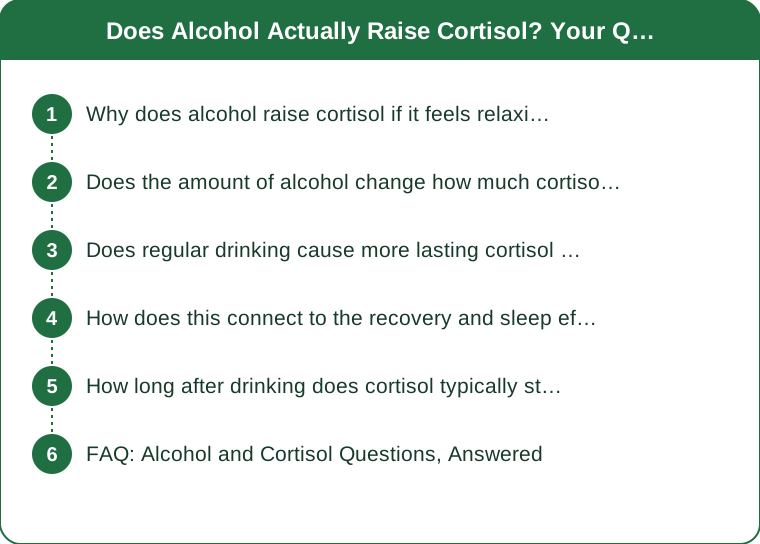
Why does alcohol raise cortisol if it feels relaxing?
The felt relaxation from alcohol comes from its effect on GABA and dopamine systems in the brain, which is a separate pathway from its effect on the HPA axis (the system that regulates cortisol). Alcohol activates the body’s stress-response system at a physiological level even while producing a subjective feeling of relaxation — the two effects aren’t contradictory, they’re just operating through different mechanisms.
Does the amount of alcohol change how much cortisol rises?
Generally yes — research suggests a dose-dependent relationship, where larger amounts of alcohol tend to produce a more pronounced cortisol response than smaller amounts. Occasional, moderate drinking appears to have a smaller acute cortisol effect than heavier drinking sessions.
Does regular drinking cause more lasting cortisol changes, beyond just the night of drinking?
Chronic heavier alcohol use has been associated with more sustained HPA axis dysregulation, meaning cortisol patterns can become disrupted beyond just the acute post-drinking window — this is a separate concern from the short-term cortisol spike after a single drinking session.

How does this connect to the recovery and sleep effects associated with alcohol?
The cortisol elevation from alcohol likely contributes to the sleep-quality disruption discussed elsewhere in sleep and alcohol research — elevated cortisol overnight can interfere with the deeper sleep stages your body relies on for recovery, adding another mechanism (beyond direct sleep-architecture disruption) by which alcohol affects next-day recovery and stress levels.
How long after drinking does cortisol typically stay elevated?
Research suggests the acute cortisol elevation can persist for several hours after drinking, though the exact duration varies based on amount consumed and individual factors — this is part of why some people notice feeling more “wired” or anxious the day after drinking, beyond just typical hangover symptoms.
FAQ: Alcohol and Cortisol Questions, Answered
Does this mean an occasional drink is bad for stress management overall?
Not necessarily — the research points to a real physiological effect, but occasional, moderate drinking’s overall impact on someone’s stress levels involves many factors beyond just this one hormone response, including the social and psychological aspects of drinking. This is general information, not medical advice.
Is non-alcoholic beer or wine a way to avoid this cortisol effect while still having the ritual?
Since non-alcoholic versions contain minimal to no alcohol, they would be expected to avoid the alcohol-specific cortisol elevation, though this hasn’t been studied as extensively as regular alcohol’s effects.
Does food help reduce alcohol’s cortisol-raising effect?
Eating before or while drinking slows alcohol absorption generally, which may moderate the intensity of the acute physiological response, though it likely doesn’t eliminate the underlying cortisol effect entirely.
TL;DR:
- Alcohol raises cortisol acutely, even though it feels relaxing in the moment
- The effect appears dose-dependent — more alcohol, more pronounced cortisol response
- Regular heavier drinking is associated with more chronic HPA axis and cortisol disruption
- Elevated cortisol likely contributes to alcohol’s sleep-disrupting effects
This is general information, not medical advice — if stress, sleep, or drinking patterns feel like a concern, a doctor can help sort out what’s actually going on.
Keep Reading
This article is for general informational purposes only and is not medical advice. Always consult a qualified health professional for guidance specific to you.