Cortisol and Exercise: When Training Helps Stress and When It Adds to It
Exercise both raises and lowers cortisol — a paradox that confuses every stressed person googling whether to work out tonight. The resolution: training is a stressor that TRAINS the stress system, until life-stress plus training-stress overflows the same bucket. The balance guide.

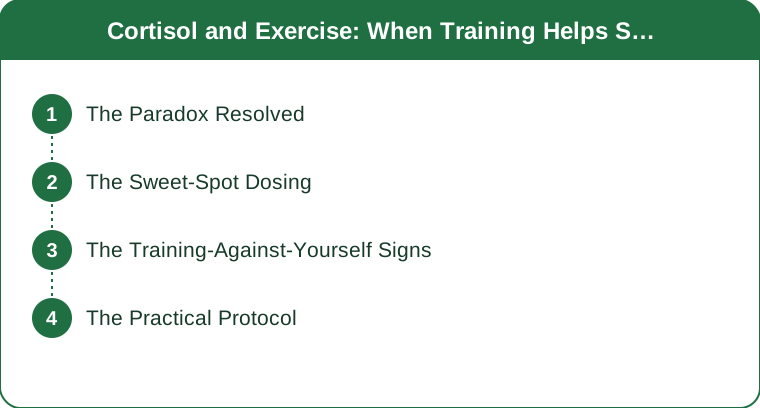
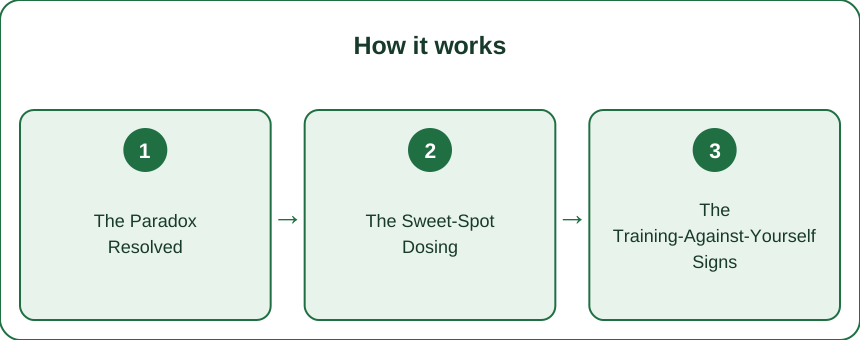
The Paradox Resolved
The two-timescale truth: exercise acutely RAISES cortisol (every workout is a controlled stress — that’s the point; the spike is the stimulus), while regular training LOWERS baseline stress reactivity (the adapted system responds to life’s stressors with smaller spikes and faster recoveries — exercise is stress inoculation with a schedule), and the bucket model that makes it practical (life stress and training stress fill ONE recovery bucket — the workout that fit easily in a calm week overflows a brutal one; the bucket doesn’t care which stress is ‘good’).
The Sweet-Spot Dosing
Training BY stress level: the calm-life weeks carry hard training happily (the bucket has room — push, progress, redline legally), the loaded weeks want the middle tier (moderate strength and steady cardio still inoculate without overflowing — the 70% session on the 100% week), and the crisis weeks flip the prescription (walks, gentle yoga, the breathwork-and-movement tier — the parasympathetic menu; during acute life stress, the hard workout adds a spike to a system begging for descent). The skill is matching Tuesday’s session to Tuesday’s life — the program written in January doesn’t know about this week.

The Training-Against-Yourself Signs
When exercise becomes the extra stressor: the marker cluster (workouts feeling harder at the same loads, sleep degrading on training days, the wired-but-exhausted evenings, getting sick more — the overtraining-signs list arriving via life-stress instead of training volume), the honest audit question (‘does this workout give me energy or cost my last reserves?’ — the same question from the postpartum world applies to every depleted season), and the female-physiology note (chronic under-fueling plus high stress plus hard training is the RED-S triangle — cycles going strange is the system waving a flag; food and rest are the fix, not more discipline).
The Practical Protocol
The stress-aware training week: the anchor sessions stay (two moderate strength sessions survive almost any week — the minimal-fitness floor doubles as the stress-proof floor), the intensity floats (hard intervals live on the calmer days — check the calendar before the redline), the downshift menu stands ready (the swap-not-skip rule: the planned HIIT becomes the long walk on the brutal day — movement continues, the spike doesn’t), and the recovery non-negotiables (post-workout wind-down, honest sleep, actual food — the bucket empties through exactly these drains). Exercise remains the best stress medicine on the market — dosed like medicine, not like punishment.
One bucket for all stress, match the session to the week, swap don’t skip on brutal days. Exercise trains the stress system — until it overfills it; the calendar-aware workout is the whole skill.
Keep Reading
This article is for general informational purposes only and is not medical advice. Always consult a qualified health professional for guidance specific to you.