Why the Wrong Workout Intensity Can Raise Cortisol Instead of Lowering It
Exercise gets recommended broadly as a cortisol-lowering habit, which is true on average but skips an important detail — the wrong intensity on the wrong day can actually spike cortisol further rather than easing it. The relationship depends heavily on matching intensity to current stress load, not just showing up and moving. Here is why intensity matters more than exercise itself, the specific mismatch that backfires, and how to match intensity to where you actually are that day.

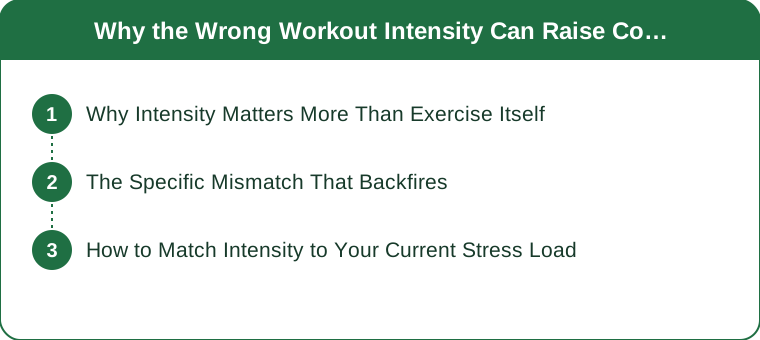
Why Intensity Matters More Than Exercise Itself
The dose-dependent relationship: the the-cortisol-response-to-exercise-is-dose-dependent (the body’s cortisol release during exercise scaling with intensity and duration, meaning ‘exercise’ isn’t one uniform stimulus but a spectrum from the cortisol-and-exercise-balance logic — the intensity-is-the-actual-variable-not-exercise-as-a-category), the the-moderate-exercise-generally-lowers-cortisol-over-time (the moderate-intensity movement showing the most consistent cortisol-lowering pattern across research, especially with regularity — the moderate-intensity-has-the-clearest-lowering-pattern), the the-high-intensity-exercise-causes-an-acute-cortisol-spike (the vigorous, high-intensity training producing a real, expected acute cortisol rise as part of the normal stress-adaptation response — the a-spike-during-intense-exercise-is-actually-normal-and-expected), the the-the-issue-is-stacking-not-intensity-itself (the problem arising specifically from stacking high-intensity exercise on top of an already elevated stress and cortisol baseline, not from high intensity in isolation — the its-about-stacking-on-existing-stress-not-intensity-alone), the the-recovery-between-intense-sessions-determines-the-net-effect (the adequate recovery between high-intensity sessions determining whether cortisol nets out lower over time or stays chronically elevated — the recovery-time-determines-whether-the-spike-resolves-or-accumulates), and the reframe (the exercise-cortisol relationship as intensity-and-context-dependent, not simply exercise-is-good-and-more-is-better — matching intensity to current stress and recovery status is the actual variable that determines the outcome)).

The Specific Mismatch That Backfires
Where it goes wrong: the the-high-intensity-training-during-an-already-high-stress-period (the adding vigorous training on top of a demanding work stretch, poor sleep, or other major life stress compounding rather than relieving the cortisol load — the compounding-stress-with-more-intense-stress-is-the-core-mismatch), the the-insufficient-sleep-plus-high-intensity-training (the training hard on inadequate sleep removing the recovery window the body needs to process the exercise-induced cortisol spike properly from the cortisol-and-sleep-guide logic — the poor-sleep-removes-the-safety-net-that-makes-intense-training-net-positive), the the-under-fueling-before-high-intensity-sessions (the training intensely in a notably under-fueled state adding physiological stress on top of the exercise stress itself — the under-fueling-adds-another-layer-of-stress-to-an-already-demanding-session), the the-training-hard-every-day-without-easier-days (the a schedule with no lower-intensity or rest days preventing the cortisol response from ever fully resolving between sessions — the no-recovery-days-means-the-spikes-never-fully-resolve), the the-ignoring-subjective-signals-of-overreaching (the pushing through persistent fatigue, irritability or unusual soreness rather than treating them as signals to reduce intensity temporarily — the ignoring-the-signals-is-what-turns-a-normal-spike-into-a-chronic-problem), and the frame (the mismatch as stacking intense training onto an already high-stress period, inadequate sleep, under-fueling, no easier days, and ignored overreaching signals — the intensity itself usually isn’t the problem, the context around it is).
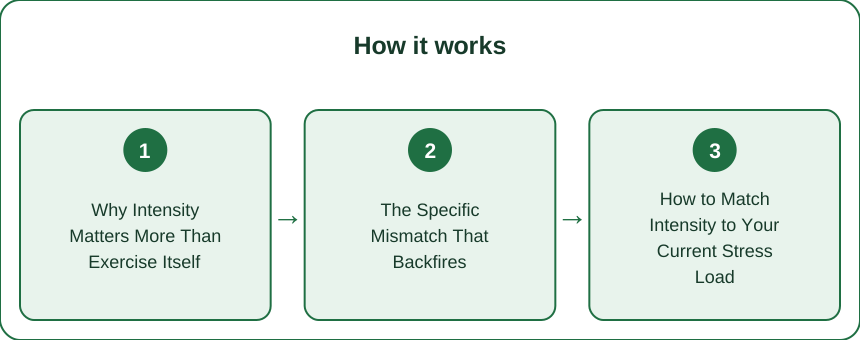
How to Match Intensity to Your Current Stress Load
The practical approach: the do-a-quick-honest-stress-check-before-choosing-intensity (the briefly assessing current sleep quality, life stress and energy level before deciding on a workout’s intensity that day — the a-thirty-second-check-in-changes-the-right-choice), the the-favor-moderate-intensity-during-high-stress-stretches (the choosing walking, moderate cardio or lighter strength work specifically during demanding life periods rather than pushing hardest exactly when stress is already highest from the how-to-lower-cortisol-naturally-guide logic — the moderate-intensity-is-the-safer-default-during-high-stress-periods), the the-reserve-high-intensity-for-well-recovered-periods (the saving the hardest training sessions for periods of adequate sleep, food and lower background stress, when the body can actually benefit from and recover from the intensity — the save-the-hardest-sessions-for-when-recovery-capacity-is-actually-there), the the-build-in-genuinely-easier-days-regardless-of-motivation (the scheduling lower-intensity days as a fixed part of the plan rather than only taking them when forced to by exhaustion — the planned-easier-days-prevent-accumulation-better-than-reactive-ones), the the-track-your-own-response-not-just-the-generic-recommendation (the noticing how you personally feel and function after different intensities during different stress periods, since individual response varies from the cortisol-reset-honest-guide logic — the your-own-tracked-response-is-more-useful-than-a-generic-rule), and the frame (the practical matching as a quick honest stress check before choosing intensity, favoring moderate intensity during hard stretches, saving high intensity for well-recovered periods, building in fixed easier days, and tracking your own personal response — exercise as a genuinely responsive tool rather than a one-size-fits-all prescription).
Exercise’s relationship with cortisol is dose-dependent rather than uniformly beneficial — moderate-intensity movement shows the most consistent cortisol-lowering pattern over time, while high-intensity training produces a normal, expected acute cortisol spike that’s part of healthy stress adaptation, not inherently a problem. The mismatch that actually backfires is stacking intense training on top of an already elevated stress load, inadequate sleep, or under-fueling, without enough easier recovery days to let the spike resolve between sessions. Match intensity to your actual current state by doing a quick honest check of sleep, stress and energy before choosing a workout’s intensity, favoring moderate intensity during genuinely demanding life stretches, reserving the hardest sessions for well-recovered periods, building fixed easier days into the schedule rather than only taking them when forced to, and tracking your own personal response rather than following one generic recommendation.
Keep Reading
This article is for general informational purposes only and is not medical advice. Always consult a qualified health professional for guidance specific to you.