Cortisol and Exercise Timing: Every Question Answered
Quick Answer: Cortisol naturally peaks in the morning as part of a healthy daily rhythm, and moderate exercise at any time of day doesn’t meaningfully disrupt this for most people — chronic overtraining and severe under-eating are the actual cortisol concerns, not workout timing alone.
Cortisol has become a catch-all fear in fitness content — is morning cardio bad, is fasted training bad, is this workout “too stressful”? Here’s a direct, question-by-question answer.

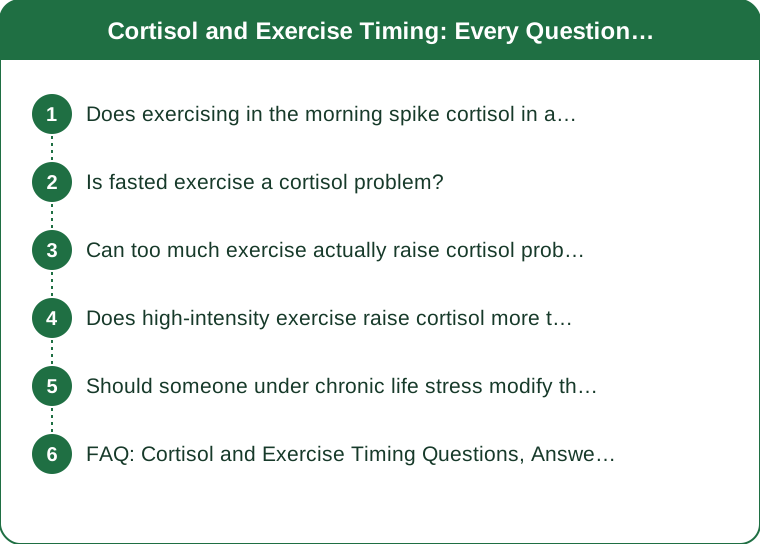
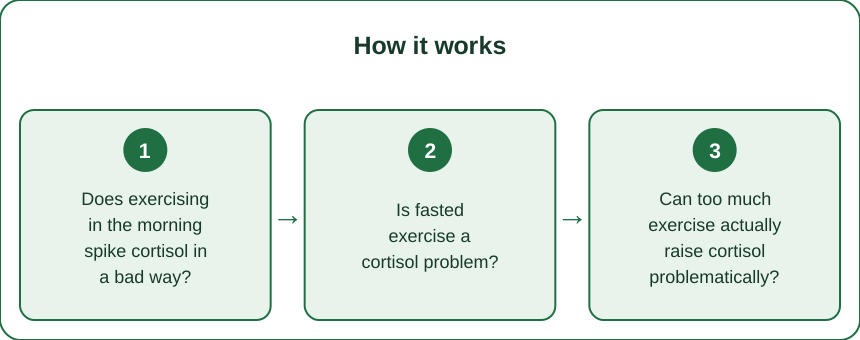
Does exercising in the morning spike cortisol in a bad way?
No — cortisol is naturally highest in the first hour after waking as part of the normal daily rhythm (the cortisol awakening response), and exercise during this window is working with your body’s existing pattern, not against it. This is a normal, healthy fluctuation, not a sign that morning workouts are harmful.
Is fasted exercise a cortisol problem?
For most healthy people doing moderate-length sessions, no — fasted training does raise cortisol somewhat compared to fed training, but this is a normal, temporary, adaptive response, not evidence of harm. The concern becomes more relevant with very long fasted sessions combined with chronic under-eating, which is a different and more extreme scenario than a typical fasted morning workout.
Can too much exercise actually raise cortisol problematically?
Yes — this is the more legitimate concern. Chronically excessive training volume without adequate recovery is associated with persistently elevated cortisol and symptoms like poor sleep, mood disruption, and plateaued or declining performance, sometimes called overtraining syndrome. This is a volume-and-recovery problem, not a workout-timing problem.

Does high-intensity exercise raise cortisol more than low-intensity?
Generally yes, temporarily — higher intensity and longer duration sessions produce a larger acute cortisol response than gentle movement, but this acute rise is a normal part of the stress-adaptation cycle that drives fitness improvements, not something to avoid. The issue is chronic elevation from inadequate recovery, not the normal temporary rise during a hard session.
Should someone under chronic life stress modify their workout intensity?
It’s a reasonable consideration — someone already dealing with significant non-exercise stress (poor sleep, high work stress, inadequate nutrition) may benefit from balancing hard training sessions with more recovery-focused movement, since total stress load, not exercise alone, is what determines whether cortisol stays elevated long-term.
FAQ: Cortisol and Exercise Timing Questions, Answered
Is evening exercise bad because it might disrupt cortisol’s natural evening decline?
Moderate evening exercise doesn’t meaningfully disrupt healthy cortisol rhythm for most people, though very intense, late-night sessions close to bedtime can affect sleep onset for some individuals — this is more of a sleep-quality consideration than a cortisol-harm one.
How do I know if my workouts are contributing to chronically high cortisol?
Persistent poor sleep, unusual fatigue despite adequate rest, plateaued or declining performance, and mood disruption alongside high training volume are the pattern to watch for — not the acute post-workout cortisol rise itself.
Does belly fat prove high cortisol is a problem?
Cortisol is one of many factors influencing fat distribution, but belly fat alone isn’t a reliable standalone indicator of a cortisol problem — a full symptom pattern matters more than this single visual marker.
TL;DR:
- Morning cortisol peaks are normal — morning exercise works with this rhythm, not against it
- Fasted training’s cortisol rise is normal and temporary for most healthy people
- Chronic overtraining without recovery is the actual cortisol concern, not workout timing
- Total life stress load matters more than any single workout’s timing or intensity
This is general information, not medical advice — persistent symptoms suggesting chronic stress dysregulation are worth discussing with a doctor.
Keep Reading
This article is for general informational purposes only and is not medical advice. Always consult a qualified health professional for guidance specific to you.