Cortisol and Weight Training Questions, Answered
Quick Answer: Weight training does raise cortisol temporarily as part of a normal, healthy stress response to exercise, and for most people at typical training volumes this acute rise is followed by a return to baseline and net-positive long-term effects on stress resilience — cortisol concerns from weight training become more relevant specifically at very high volumes, inadequate recovery, or chronic under-fueling, not from normal, well-recovered training.
Cortisol anxiety around weight training has become a common concern, but the actual relationship is more nuanced than “lifting raises cortisol, so it’s bad” — here are the specific questions people usually have.

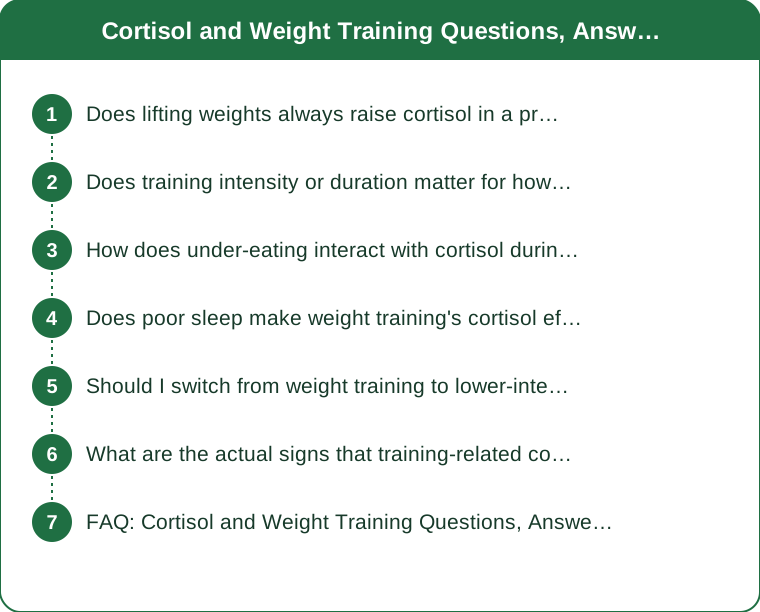
Does lifting weights always raise cortisol in a problematic way?
No — an acute, temporary cortisol rise during and immediately after a training session is a completely normal physiological stress response to any demanding exercise, not unique to weight training, and it typically returns to baseline within a few hours for someone who’s adequately recovered and fueled.
The concerning pattern isn’t a normal training session’s temporary cortisol rise — it’s chronically elevated cortisol from excessive training volume without adequate recovery, which is a different, less common situation than typical strength training.
Does training intensity or duration matter for how much cortisol rises?
Yes — longer, higher-volume sessions tend to produce a more pronounced and longer-lasting cortisol response than shorter, more moderate sessions, which is part of why very long training sessions (well beyond an hour, especially combined with inadequate recovery) are more commonly associated with cortisol-related concerns than typical 45-60 minute strength sessions.
How does under-eating interact with cortisol during weight training?
Training in a significant caloric deficit, especially combined with high training volume, compounds cortisol elevation more than adequately fueled training does, since the body perceives combined training stress and energy scarcity as a more significant overall stressor.
This is one of the more directly modifiable factors — ensuring adequate overall calorie and carbohydrate intake around training sessions specifically helps blunt this compounding effect.

Does poor sleep make weight training’s cortisol effect worse?
Yes, meaningfully — inadequate sleep independently raises baseline cortisol, and combining that with training-induced acute cortisol spikes creates a compounding effect rather than two separate, unrelated issues; prioritizing sleep is one of the more effective ways to keep training-related cortisol responses in a healthy range.
Should I switch from weight training to lower-intensity exercise to protect cortisol levels?
For most people training at reasonable volumes with adequate recovery, no — weight training provides substantial long-term benefits (muscle, bone density, metabolic health, and even improved long-term stress resilience) that outweigh the temporary acute cortisol response, which resolves normally with proper recovery.
Switching away from weight training specifically due to cortisol concerns is usually only warranted for people already showing signs of overtraining or chronic excessive stress load, not as a general precaution for typical training.
What are the actual signs that training-related cortisol has become a genuine problem?
Persistent, unexplained fatigue that doesn’t improve with rest, worsening sleep quality despite consistent training, unusual mood changes, or a noticeable decline in performance and recovery over weeks are the signals worth paying attention to — these suggest genuine overtraining or chronic stress overload, not a normal single-session cortisol response.
FAQ: Cortisol and Weight Training Questions, Answered
Does morning weight training raise cortisol more than evening training?
Cortisol is naturally higher in the morning due to normal circadian rhythm, so morning training does occur on top of a higher baseline, but this doesn’t appear to create meaningfully worse long-term outcomes for most people compared to evening training.
Can adequate protein intake help offset training-related cortisol?
Adequate overall nutrition, including protein, supports recovery broadly, which indirectly helps normalize cortisol response, though protein specifically isn’t a targeted “cortisol blocker” — it’s part of the broader recovery and fueling picture.
Is it normal to feel more anxious right after an intense lifting session?
A temporary post-exercise stress-hormone response can occasionally translate to feeling keyed up rather than immediately calm, which is a normal acute effect for some people and generally settles within a short period after the session ends.
TL;DR:
- A temporary cortisol rise during weight training is a normal stress response, not inherently harmful
- Excessive volume, chronic under-fueling, and poor sleep are what actually create problematic cortisol patterns
- Weight training’s long-term benefits generally outweigh the acute, well-recovered cortisol response
- Persistent fatigue, worsening sleep, and declining performance are the real warning signs to watch for
Cortisol concerns around weight training are usually about training load and recovery, not a reason to avoid lifting altogether.
Keep Reading
This article is for general informational purposes only and is not medical advice. Always consult a qualified health professional for guidance specific to you.