Cortisol and Dehydration: Your Questions, Answered
Quick Answer: Yes - dehydration raises cortisol measurably. Studies have found meaningfully elevated cortisol at around 2 percent body mass fluid loss, which is a level most people reach without feeling especially thirsty. The effect is real but modest, and it stacks with other stressors rather than causing problems alone. Steady intake through the day matters more than large volumes at once.
This is one of the few cortisol topics where the mechanism is straightforward and the intervention costs nothing.

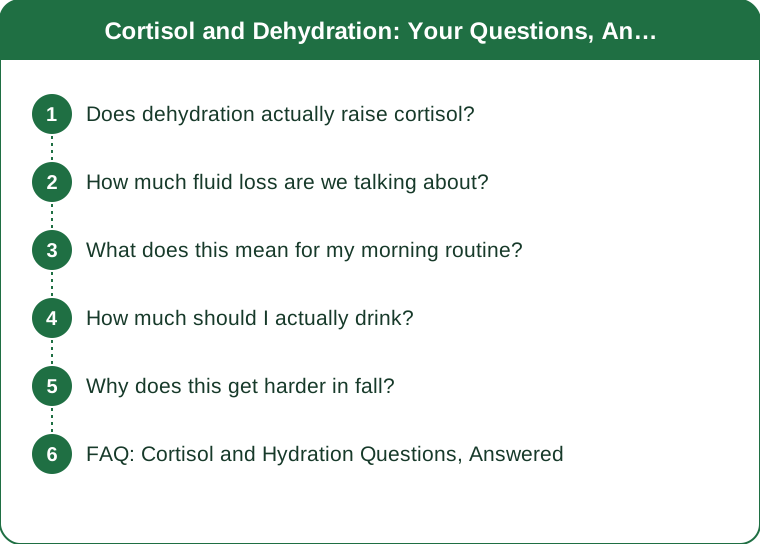
Does dehydration actually raise cortisol?
Yes, and it is one of the better-established findings in the area.
Studies examining exercise in a dehydrated versus hydrated state have found higher cortisol responses when participants were dehydrated by around 2 percent of body mass, at matched exercise intensities. Some research reports differences in the range of 50 percent or more in the cortisol response to the same workload.
The mechanism is reasonable. Reduced plasma volume increases cardiovascular strain, and the hypothalamic-pituitary-adrenal axis responds to that strain as it does to other physiological stressors. Vasopressin - the antidiuretic hormone released when you are dehydrated - also stimulates ACTH release, providing a direct pathway.
What this does not mean: that mild dehydration is dangerous, or that a slightly elevated cortisol reading is a health event. Cortisol rises in response to lots of things, including standing up. The relevance is cumulative, not acute.
How much fluid loss are we talking about?
Two percent of body mass is the figure that appears most often, and it is easier to reach than people assume.
For someone weighing 150 pounds, that is 3 pounds of fluid - roughly 1.4 liters. A moderately hard hour of training in warm weather can produce that on its own. A busy day with coffee, no water bottle, and a warm office can get you close without any exercise at all.
Thirst is a lagging indicator. The sensation typically appears around 1 to 2 percent fluid loss, which means by the time you feel thirsty you are already at or near the threshold where measurable effects begin.
The simplest self-check is urine color - pale straw is the target, and dark yellow indicates meaningful deficit. It is imperfect, since vitamins and some foods affect color, but it takes no equipment and works well enough as a daily signal.
What does this mean for my morning routine?
Overnight is the longest period you go without fluid, so most people wake mildly dehydrated. Cortisol is also at its natural daily peak in the 30 to 45 minutes after waking - the cortisol awakening response.
Those two things overlapping is not harmful, but it does make the argument for drinking 12 to 16 ounces of water before coffee rather than after.
Caffeine’s diuretic effect is often overstated - habitual coffee drinkers develop substantial tolerance to it and moderate coffee intake does not produce net dehydration. But coffee on an empty stomach in a dehydrated state does reliably make some people feel jittery, and hydrating first tends to reduce that.
For fasted morning training specifically, this matters more. You are combining overnight fluid loss, peak cortisol, no fuel, and exercise stress. If fasted morning workouts leave you feeling depleted rather than energized, hydration is the first variable to change before anything more complicated.

How much should I actually drink?
The commonly cited 8 glasses figure has no strong evidential basis. Intake needs vary substantially with body size, activity, climate, and diet.
More useful reference points:
- Roughly 30 to 35ml per kilogram of body weight per day as a baseline, including fluid from food.
- Add 500 to 750ml per hour of exercise, more in heat.
- About 20 percent of typical intake comes from food - fruit, vegetables, soups, yogurt.
The distribution matters as much as the total. Drinking a liter at once produces a large urine output and much of it does not get retained. Steady intake - 150 to 250ml every hour or two - results in better hydration status from the same total volume.
Electrolytes matter when sweat losses are high. For an hour of moderate exercise, water is fine. Beyond 90 minutes, or in significant heat, adding sodium improves fluid retention meaningfully. Plain water in very large volumes with heavy sweating can dilute blood sodium, which is a genuine if uncommon risk.
Why does this get harder in fall?
Because thirst drops faster than sweat loss does.
As air temperature falls, the thirst response is blunted - a well-documented effect. Meanwhile, you are still sweating during exercise, respiratory water loss actually increases in cooler drier air, and indoor heating begins reducing ambient humidity.
The result is a predictable pattern: people become more dehydrated in fall than in summer while feeling less thirsty about it. Reports of fall fatigue, headaches, and afternoon slumps frequently have a hydration component that nobody investigates because it does not feel like a hot-weather problem.
The fix is behavioral rather than physiological. Keep the same water bottle habit you had in August through October, and do not let the trigger be thirst. Attach it to existing events - every meeting, every time you refill coffee, every time you get up from your desk.
If your afternoon energy has dropped in the last few weeks and nothing else changed, this is worth a week of testing before you look at anything more complex.
FAQ: Cortisol and Hydration Questions, Answered
Will drinking more water lower my cortisol?
It removes one stressor from the stack. It will not lower cortisol that is elevated for other reasons - sleep debt, training load, or life stress. Think of it as removing an unnecessary input rather than as a treatment.
Does coffee dehydrate me?
Not meaningfully at habitual intakes. Regular coffee drinkers develop tolerance to the diuretic effect, and moderate coffee contributes net positively to daily fluid intake.
Should I be adding electrolytes daily?
Most people eating a normal diet do not need them outside of prolonged exercise or heat. If you train over 90 minutes, sweat heavily, or eat a very low sodium diet, they help. Otherwise they are mostly unnecessary. This is general information, not medical advice.
TL;DR:
- Dehydration at around 2 percent of body mass measurably raises cortisol, partly via vasopressin.
- Thirst appears around 1 to 2 percent loss, so it is a lagging signal, not an early one.
- Drink 12 to 16 ounces before coffee, especially before fasted morning training.
- Steady intake beats large volumes - 150 to 250ml every hour or two retains better.
- Fall is a hidden risk: thirst drops with temperature while sweat and respiratory losses do not.
- Hydration removes a stressor from the stack. It does not fix cortisol elevated by sleep debt or training load.
If your afternoon energy has fallen off over the last few weeks, run a week of deliberate hydration before you change anything else. This is general information, not medical advice.
Keep Reading
This article is for general informational purposes only and is not medical advice. Always consult a qualified health professional for guidance specific to you.