Is 'Cortisol Face' Real, or Is It Just a Trendy Name for Normal Puffiness?
Quick Answer: Chronically and significantly elevated cortisol — the kind seen in medical conditions like Cushing’s syndrome, not everyday stress — can genuinely cause facial rounding and fat redistribution, but the common social-media version of ‘cortisol face’ from ordinary daily stress is far more likely to be temporary water retention, sleep quality, alcohol, or sodium intake than a true cortisol-driven physical change.
The underlying mechanism cortisol face describes is medically real, but it’s being applied far more broadly online than the actual research supports for typical, non-clinical stress levels.

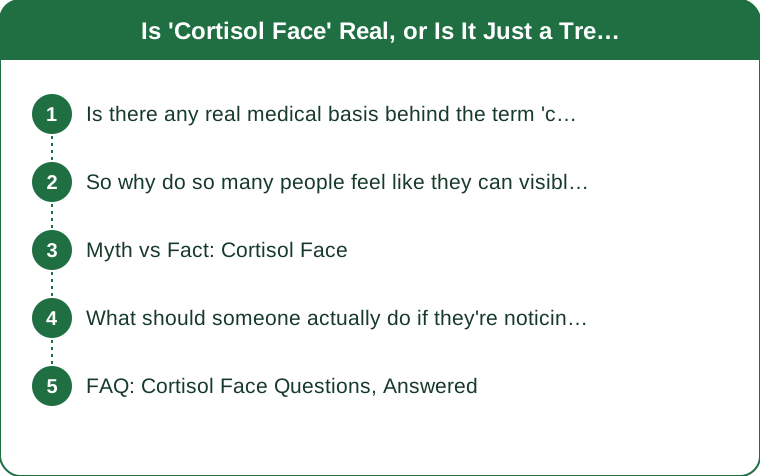
Is there any real medical basis behind the term ‘cortisol face’?
Yes — in Cushing’s syndrome, a condition involving significantly and chronically elevated cortisol, facial rounding (‘moon face’) is a well-documented clinical symptom caused by fat redistribution driven by sustained high cortisol levels over an extended period.
This is a distinct, diagnosable medical condition, not the kind of everyday stress fluctuation most people experience — which is the key distinction the social media trend usually leaves out.
So why do so many people feel like they can visibly see ‘cortisol face’ from regular stress?
Everyday stress can indirectly contribute to facial puffiness through poor sleep, increased alcohol consumption, higher sodium intake, and dehydration — all of which cause temporary water retention and puffiness that looks similar to what’s described online, without actually being the same cortisol-driven fat redistribution seen in clinical cases.
The visual overlap between temporary stress-related water retention and true clinical cortisol face is likely why the term generalized so broadly, even though the underlying causes are quite different.

Myth vs Fact: Cortisol Face
Myth: Any stressful week can visibly change your face shape through cortisol. Fact: That level of change is associated with chronic, clinically elevated cortisol conditions, not typical daily stress fluctuation.
Myth: Facial puffiness after a stressful period is definitely cortisol-driven. Fact: Sleep quality, sodium intake, alcohol, and hydration are much more likely everyday explanations for temporary puffiness.
Myth: There’s a specific skincare or supplement fix for ‘cortisol face.’ Fact: If puffiness is from sleep, sodium, or hydration, addressing those factors directly is more effective than any cortisol-targeted product.
What should someone actually do if they’re noticing regular facial puffiness?
Start with sleep quality, sodium and alcohol intake, and hydration levels before assuming it’s cortisol-related — these are the more common and directly addressable everyday causes of facial puffiness that overlap visually with what gets called ‘cortisol face’ online.
If puffiness is persistent, doesn’t resolve with those adjustments, and comes with other symptoms (unusual weight gain, muscle weakness, stretch marks), that combination is worth discussing with a doctor, since it could indicate an actual underlying hormonal issue rather than everyday lifestyle factors.
FAQ: Cortisol Face Questions, Answered
Can reducing stress alone reverse facial puffiness?
If the puffiness stems from stress-related poor sleep or increased alcohol/sodium intake, addressing those specific behaviors is more directly effective than targeting ‘stress’ or ‘cortisol’ in the abstract.
Are there visible signs that distinguish clinical cortisol-related facial changes from ordinary puffiness?
Clinical cases (like Cushing’s syndrome) typically come with other symptoms — unusual weight gain pattern, muscle weakness, skin changes — that ordinary temporary puffiness doesn’t include.
Is ‘cortisol face’ a term doctors actually use?
No — it’s a social media term; medical professionals refer to the clinical version as facial rounding associated with specific hormonal conditions, not as a standalone diagnosis from everyday stress.
TL;DR:
- True cortisol-driven facial rounding is a documented symptom of clinical conditions like Cushing’s syndrome, not everyday stress
- Common causes of stress-related facial puffiness are more likely sleep, sodium, alcohol, and hydration
- The visual overlap between the two is probably why the term spread so broadly online
- Persistent puffiness with other unusual symptoms is worth a doctor’s opinion rather than a cortisol supplement
The term borrows real medical language for something that’s usually a much more ordinary, addressable cause. This is general information, not medical advice.
Keep Reading
This article is for general informational purposes only and is not medical advice. Always consult a qualified health professional for guidance specific to you.