Why What You Do in the First Hour After Waking Affects Cortisol More Than You'd Think
Quick Answer: Cortisol naturally peaks about 30-45 minutes after waking (the cortisol awakening response), and morning light exposure, delaying caffeine by 60-90 minutes, and avoiding immediate high-stress input (phone, email) all support this natural rhythm rather than disrupting it.
What is the cortisol awakening response, and is it actually normal?
Yes — a sharp cortisol rise in the first 30-45 minutes after waking is a completely normal part of the body’s daily rhythm, not a sign of stress or dysfunction; it’s what helps mobilize energy to start the day.
Does drinking coffee immediately after waking interfere with this rhythm?
Some research suggests caffeine right at the peak of the natural cortisol awakening response may blunt the body’s own cortisol signal and also builds tolerance to caffeine’s stimulating effect faster — delaying coffee by 60-90 minutes lets the natural response run its course first.
Does checking phone notifications first thing genuinely affect cortisol?
Immediate exposure to stressful or demanding input (email, news, social media) can compound the natural cortisol awakening response with an added stress response, essentially stacking two cortisol triggers back to back rather than letting the natural one settle first.

What exactly is the cortisol awakening response, mechanically?
Within the first 30-45 minutes after waking, cortisol levels rise sharply — often 50-75% above the pre-waking level — before gradually declining over the rest of the day. This is a well-documented, healthy part of the circadian rhythm that helps transition the body from sleep into wakeful alertness.
How does morning light exposure interact with this cortisol pattern?
Bright light exposure, especially natural sunlight, in the first 30-60 minutes after waking helps properly anchor the timing of the cortisol awakening response to your actual wake time, which supports more consistent energy and alertness patterns day to day compared to waking in dim indoor light.

Why does delaying caffeine specifically matter for cortisol?
Caffeine consumed right during the natural cortisol peak may add to an already-elevated state rather than providing the alertness boost people expect from it — waiting until the natural cortisol awakening response has started to decline (roughly 60-90 minutes after waking) means caffeine works with a lower baseline rather than stacking on top of the peak.
Does stressful phone use first thing in the morning have a measurable cortisol effect?
Immediately engaging with high-stimulation, high-demand input (urgent emails, news, social comparison) can trigger an additional stress-cortisol response layered on top of the natural awakening rise, which some researchers link to the ‘wired but tired’ feeling reported by people who check phones immediately upon waking.
What does a cortisol-supportive first hour actually look like in practice?
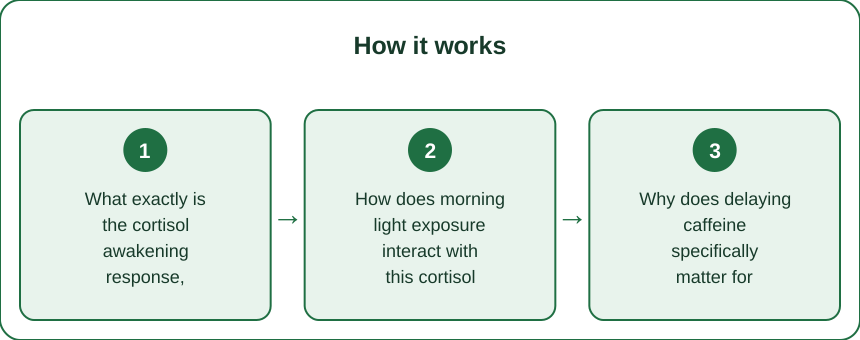
A calmer sequence — natural light exposure, a period without immediate high-stimulation input, and delayed caffeine — supports the body’s natural rhythm rather than fighting it. This doesn’t require an elaborate routine, just a deliberate order: light first, low-stimulation activities next, caffeine later.
TL;DR:
- The cortisol awakening response — a sharp rise in the first 30-45 minutes after waking — is normal, not dysfunction
- Morning light exposure helps anchor this rhythm to your actual wake time
- Delaying caffeine 60-90 minutes avoids stacking on top of the natural cortisol peak
- Immediate high-stress phone use can add an extra cortisol spike on top of the natural one
Try reordering tomorrow morning: light first, phone later, coffee last — and notice if the day feels different. This is general information, not medical advice.
Keep Reading
This article is for general informational purposes only and is not medical advice. Always consult a qualified health professional for guidance specific to you.