The Evening Wind-Down: Lowering the Stress Curve Before Bed
The cortisol rhythm is supposed to descend all evening toward sleep — and modern evenings keep yanking it back up: the 9pm work email, the doom-scroll, the intense show. The wind-down guide: the 90-minute descent protocol and the wired-but-tired rescue plan.

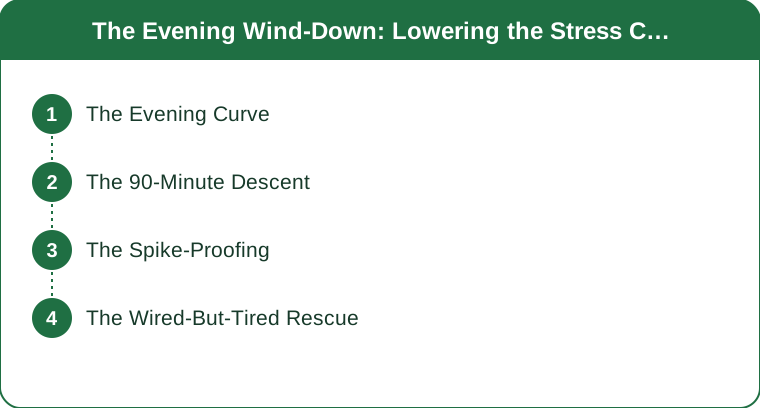
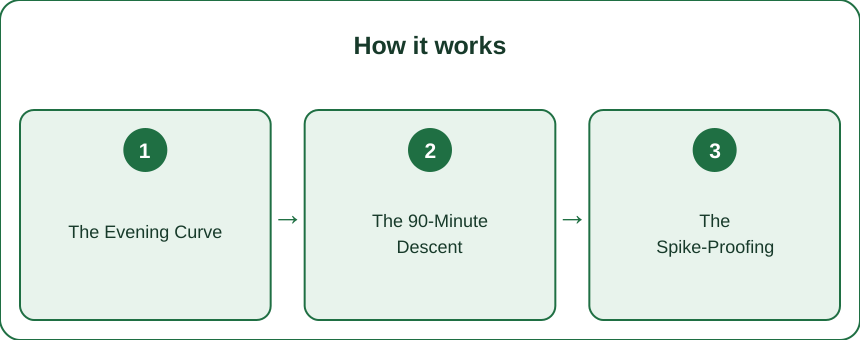
The Evening Curve
The rhythm’s second half: cortisol should be at its daily low by bedtime (the descent enables melatonin’s rise — the two hormones seesaw; evening cortisol spikes literally delay sleep chemistry), the modern spike menu (the late work check-in, the news, the argument-shaped group chat, the intense-content hour — each one a flare the descent must recover from), and the wired-but-tired signature (exhausted body, racing mind at 11pm — the classic sign the curve got yanked; the body wants sleep, the stress chemistry hasn’t cleared customs).
The 90-Minute Descent
The protocol by phase: T-minus 90 (the last-decisions line — work closes, tomorrow’s list gets written and DUMPED to paper; the open-loop thoughts that circle at midnight get parked deliberately at 9:30), T-minus 60 (the digital sunset hour — screens dim or die, the lights go warm-and-low; light is the other half of the descent), T-minus 30 (the body wing — the warm shower, the gentle stretch-or-band routine, the body scan; physical downshift signals), and T-minus 10 (the breath finale — the extended-exhale protocol in bed; the descent’s last stair). The protocol is a staircase, not a switch — each phase makes the next easier.

The Spike-Proofing
Defending the descent: the no-new-inputs rule (the evening is for CLOSING loops, not opening them — the email that can’t be answered tonight shouldn’t be read tonight; the notification schedule enforces what discipline can’t), the content curfew nuance (the gripping thriller and the rage-bait feed are both arousal — the evening’s media wants the calm shelf; the re-watch comfort show exists for a chemical reason), the exercise timing (hard training ends 3+ hours before bed — the post-workout cortisol needs runway; the evening slot belongs to the gentle tier), and the conflict clause (the 10pm hard conversation is a spike with a bedtime — the ‘tomorrow, in daylight’ deferral is nervous-system policy, not avoidance).
The Wired-But-Tired Rescue
When the curve got yanked anyway: the physiological sigh opener (twice — the fastest descent restart), the brain-dump page (the racing thoughts written until they slow — the parking lot works at midnight too), the legs-up-the-wall ten minutes (the pose that argues with adrenaline), the boring-audio tier (the sleep story or slow podcast — attention given something dull to hold), and the twenty-minute rule (still wired = up, dim light, dull activity, return — the bed stays a sleep place). The evening decides the night — walk the staircase and the curve remembers the way down.
Close loops at ninety, kill screens at sixty, warm shower at thirty, long exhales at ten. The cortisol descent is a staircase — and the evening’s only job is not yanking it back up.
Keep Reading
This article is for general informational purposes only and is not medical advice. Always consult a qualified health professional for guidance specific to you.