Is My 3PM Energy Crash Actually About Cortisol, or Is That Just a Trendy Label?
Quick Answer: A genuine afternoon cortisol dip is a real, well-documented part of the body’s natural daily cortisol rhythm, but for most people the 3pm crash is more directly caused by post-lunch blood sugar shifts, accumulated sleep debt, or dehydration than by cortisol specifically — cortisol has become a catch-all online label for a symptom that usually has a more immediately fixable cause.
Cortisol gets blamed online for almost any afternoon fatigue, but in most everyday cases, it’s one of several overlapping factors rather than the main driver.

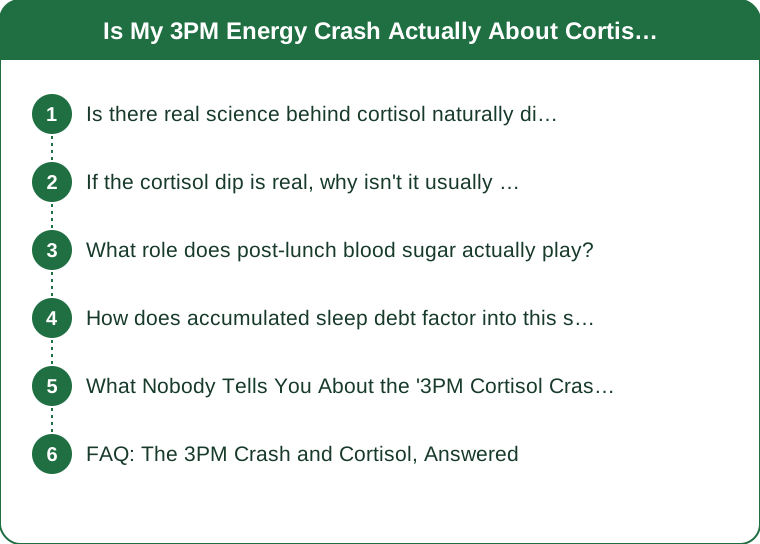
Is there real science behind cortisol naturally dipping in the afternoon?
Yes — cortisol does follow a natural daily rhythm, typically peaking shortly after waking and gradually declining through the day, with a documented smaller dip often occurring in the early-to-mid afternoon before a further decline toward evening, so the underlying rhythm claim isn’t fabricated.
If the cortisol dip is real, why isn’t it usually the main cause of the crash?
Because the natural cortisol dip is a gradual, low-magnitude shift, while most people’s actual crash experience is more sudden and pronounced than that gradual decline alone would explain, which points to an additional, more immediate factor — usually post-lunch blood sugar changes — layering on top of the baseline cortisol rhythm.
What role does post-lunch blood sugar actually play?
A large or high-glycemic lunch causes a blood sugar spike followed by a corresponding drop, and that drop’s timing lines up closely with the classic 2-3pm crash window for many people, making it a more immediate and often more significant contributor than the underlying cortisol rhythm alone.

How does accumulated sleep debt factor into this specifically?
Even a modest sleep deficit from the prior night tends to show up most noticeably in the early-to-mid afternoon, compounding whatever natural cortisol or blood sugar dip is already happening at that time, which is part of why the crash can feel much worse on days following poor sleep.
What Nobody Tells You About the ‘3PM Cortisol Crash’ Label
Nobody tells you that using ‘cortisol’ as the explanation is appealing partly because it sounds precise and scientific, even when the actual cause is something as mundane and fixable as lunch composition or last night’s sleep. Labeling it cortisol can also make the problem feel like a bigger hormonal issue requiring supplements or specific protocols, when for a lot of people the more effective fix is a smaller lunch lower in refined carbs and a consistent sleep schedule.
FAQ: The 3PM Crash and Cortisol, Answered
How can I tell if my crash is more blood-sugar related or genuinely cortisol related?
If the crash consistently follows a specific type of lunch (high-carb, large portion) and improves with a smaller or more protein-balanced meal, blood sugar is likely the bigger factor; if it persists regardless of lunch composition, other factors including cortisol rhythm and sleep debt are more likely contributors.
Does caffeine timing affect this afternoon dip?
Yes, caffeine consumed too close to the natural afternoon dip can create a more pronounced crash once it wears off, so timing caffeine earlier in the day can sometimes soften the afternoon effect.
Is it worth testing cortisol levels if the crash is severe or persistent?
For most people, addressing sleep, meal composition, and hydration first is more practical, but a persistent, severe, or otherwise unexplained pattern is worth discussing with a doctor, who can determine whether cortisol testing is actually warranted.
TL;DR:
- A natural afternoon cortisol dip is real, but it’s gradual and modest, not the sudden crash most people feel
- Post-lunch blood sugar shifts are often the more immediate, significant driver of the classic 3pm slump
- Accumulated sleep debt compounds whatever dip is already happening at that time of day
- ‘Cortisol’ has become an appealing catch-all label for a symptom that’s often more directly fixable
The crash is real either way — but knowing it’s more likely lunch and sleep than a hormonal emergency points toward simpler, more immediate fixes.
Keep Reading
This article is for general informational purposes only and is not medical advice. Always consult a qualified health professional for guidance specific to you.