Is Your Workout Actually Raising Your Cortisol Too Much?
Quick Answer: A temporary cortisol spike during and right after intense exercise is normal and expected — it’s part of how your body mobilizes energy. The concern isn’t the spike itself, it’s whether cortisol returns to baseline within a few hours or stays chronically elevated from too much intensity without enough recovery.
You’ve heard that exercise ‘raises cortisol’ and started wondering if your hard workouts are quietly working against you. The spike itself isn’t the problem — the pattern around it is.

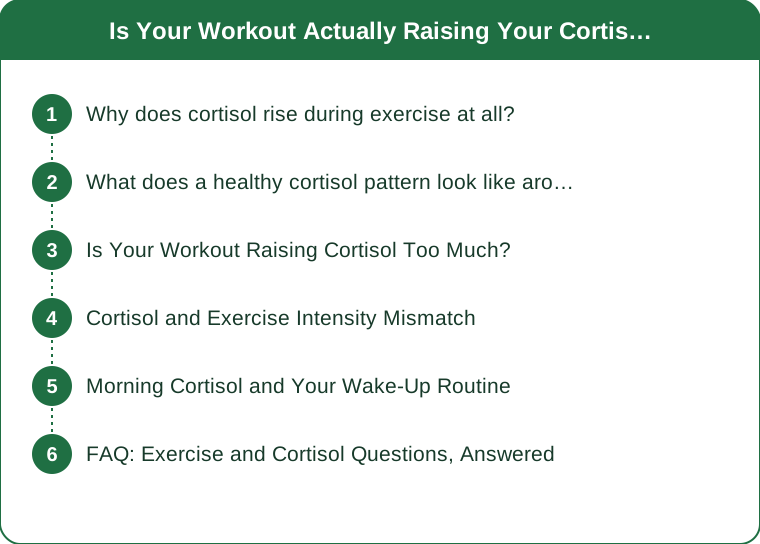
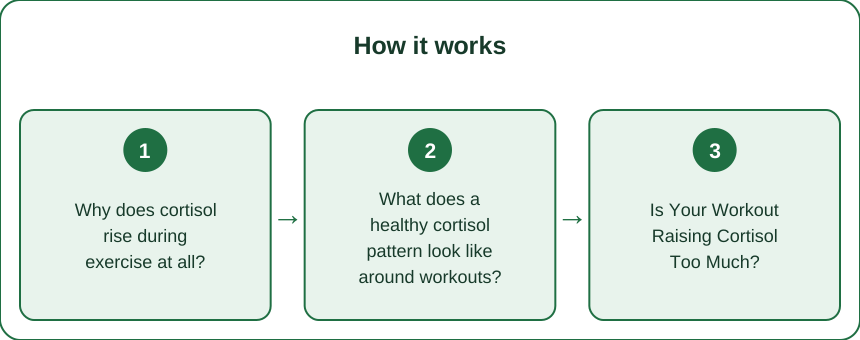
Why does cortisol rise during exercise at all?
Cortisol rising during a hard workout is a normal, functional response — it helps mobilize glucose and fat for energy exactly when your body needs it most. This isn’t a malfunction; it’s cortisol doing its actual job under real physical demand.
What does a healthy cortisol pattern look like around workouts?
A healthy pattern: cortisol rises during the session, peaks shortly after, and returns to near-baseline within a few hours, especially with adequate food and sleep. The pattern that raises real concern is elevated resting cortisol that persists day after day, not the acute training spike.
Is Your Workout Raising Cortisol Too Much?
Warning signs worth paying attention to include persistent fatigue that doesn’t improve with a rest day, poor sleep despite exhaustion, and a resting heart rate that stays elevated for multiple days after a hard session. One tired day post-workout is normal; a week of unresolving fatigue after every session is a signal to reassess volume and recovery.

Cortisol and Exercise Intensity Mismatch
The mismatch that causes chronic elevation usually isn’t a single hard workout — it’s stacking high-intensity sessions without enough recovery days, especially when combined with under-eating or poor sleep. The exercise alone rarely causes the problem; it’s exercise plus insufficient recovery inputs together.
Morning Cortisol and Your Wake-Up Routine
Cortisol naturally peaks in the first 30-45 minutes after waking as part of a healthy daily rhythm — this is different from the workout-related spike and shouldn’t be confused with a problem. A high-intensity workout scheduled right at this natural peak can feel more taxing than the same workout done later, which is worth knowing if mornings feel unusually hard.
FAQ: Exercise and Cortisol Questions, Answered
How many high-intensity workouts a week is too many?
There’s no universal number, but most people do well with 2-3 truly high-intensity sessions a week, balanced with lower-intensity or rest days — more than that without added recovery is where problems tend to show up.
Does cardio raise cortisol more than strength training?
Both raise it acutely; long-duration, high-intensity cardio without adequate fueling tends to elevate it more and for longer than shorter strength sessions.
How do I lower cortisol if it seems chronically elevated?
Prioritize sleep, reduce total training volume temporarily, and eat enough to support your training load — these three matter more than any single supplement. This is general information, not medical advice.
TL;DR:
- A workout cortisol spike is normal and expected — it’s part of the exercise response
- The real concern is cortisol staying elevated for days, not the acute spike itself
- Watch for persistent fatigue, poor sleep, and elevated resting heart rate as warning signs
- Chronic elevation usually comes from stacking hard sessions without enough recovery, sleep, or food
The spike isn’t the enemy — an unbroken pattern of spikes with no recovery in between is.
Keep Reading
This article is for general informational purposes only and is not medical advice. Always consult a qualified health professional for guidance specific to you.