Is Your Workout Raising Your Cortisol More Than It's Helping?
Quick Answer: Yes, exercise itself temporarily raises cortisol — that’s a normal, healthy stress response. It becomes a problem specifically when training is too frequent, too intense, or too under-fueled for recovery to catch up, keeping cortisol elevated rather than letting it settle back down.
Every workout raises cortisol somewhat — that’s not a red flag, it’s how exercise stress works. The real question isn’t whether your workout raises cortisol; it’s whether your body gets the chance to bring it back down before the next session.

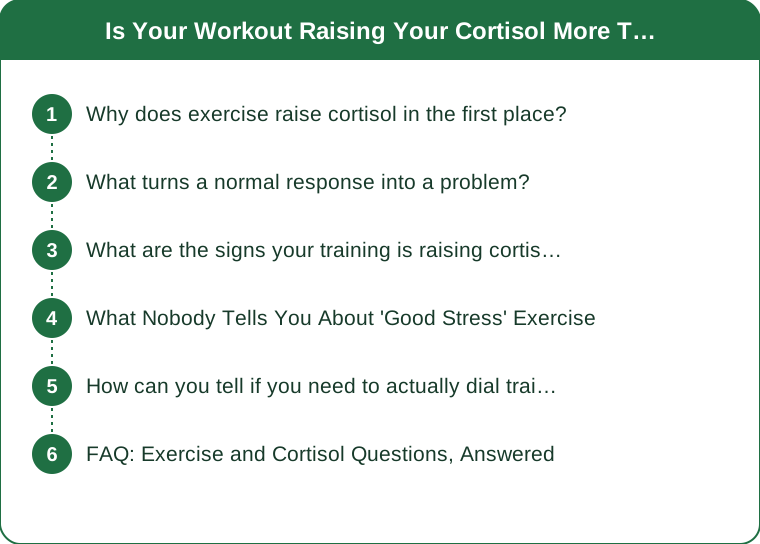
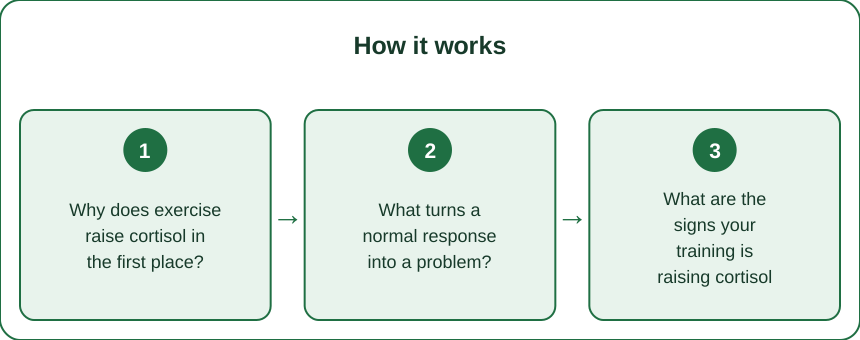
Why does exercise raise cortisol in the first place?
Cortisol is part of your body’s normal response to any physical stressor, including exercise — it helps mobilize energy (raising blood sugar) and manage inflammation during and right after a workout. This rise is temporary and expected, typically peaking during or shortly after intense exercise and declining within a few hours.
In a well-recovered person, this is a healthy, adaptive pattern. The problem isn’t the spike itself — it’s what happens (or doesn’t happen) in the hours and days after.
What turns a normal response into a problem?
Training frequency without adequate recovery is the biggest factor — daily high-intensity sessions without rest days don’t give cortisol time to return to baseline between workouts, so each new session adds stress on top of stress that hasn’t resolved yet.
Under-fueling, especially chronic calorie restriction combined with hard training, compounds the issue — your body reads inadequate energy availability as an additional stressor layered on top of exercise stress, keeping cortisol elevated longer than exercise alone would.
Poor sleep removes the primary window your body uses to lower cortisol and repair — hard training on chronically poor sleep is a combination that shows up repeatedly in research on overtraining.
What are the signs your training is raising cortisol more than helping?
Persistent fatigue that doesn’t improve with a normal rest day, sleep that gets worse despite hard training (rather than better), unusual irritability, and a stalled or reversed fitness progress despite consistent effort are the most commonly cited signs in overtraining research.
Women may also notice cycle changes — irregular or missed periods can be linked to the combination of high training stress and inadequate fueling, and this is a signal worth taking seriously rather than pushing through.

What Nobody Tells You About ‘Good Stress’ Exercise
The wellness narrative that ‘exercise always reduces stress’ skips an important nuance: moderate, well-recovered exercise reduces stress; excessive, under-recovered exercise adds to it. Both are technically ‘exercise,’ but they have opposite effects on your overall stress load.
This is part of why some people report feeling more anxious, not less, when they increase training volume aggressively — especially if it comes with under-eating, which is common when people combine a fat-loss goal with a fitness goal at the same time.
How can you tell if you need to actually dial training back?
A practical check: if you’re training hard 6-7 days a week, sleeping poorly, feeling persistently tired, and not seeing progress despite the effort, that combination — not any single symptom alone — is the signal to add rest days and reassess intake, not just push harder.
Adding 1-2 full rest days per week and prioritizing sleep for 2-3 weeks before making other changes is a reasonable first experiment, since it directly targets the two biggest levers (recovery time and sleep) without needing to overhaul your whole training plan at once.
FAQ: Exercise and Cortisol Questions, Answered
Does cardio raise cortisol more than strength training?
Longer-duration, higher-intensity cardio (especially over 60-90 minutes) tends to produce a more sustained cortisol response than shorter strength sessions, though both raise it temporarily — duration and intensity matter more than the type of exercise itself.
Can you exercise your way out of high cortisol from other life stress?
Moderate exercise can help lower baseline stress over time, but hard training added on top of an already high-stress life (work, sleep debt, etc.) can push total stress load higher rather than relieving it — context matters.
How long should it take cortisol to return to normal after a hard workout?
In a well-recovered person, cortisol typically returns close to baseline within a few hours post-exercise — if you’re consistently still feeling wired, exhausted, or unable to wind down many hours later, that’s worth paying attention to.
TL;DR:
- A temporary cortisol rise from exercise is normal and expected, not a problem by itself
- The issue is training frequency, under-fueling, and poor sleep stacking on top of that normal rise
- Watch for persistent fatigue, worsening sleep despite training, and stalled progress together, not one symptom alone
- Adding rest days and prioritizing sleep for 2-3 weeks is a reasonable first step to reassess
This is general information, not medical advice — persistent fatigue, cycle changes, or ongoing sleep disruption are worth discussing with a doctor.
Keep Reading
This article is for general informational purposes only and is not medical advice. Always consult a qualified health professional for guidance specific to you.